
Military Aviation: Transforming the Pilot into a Sensor Node
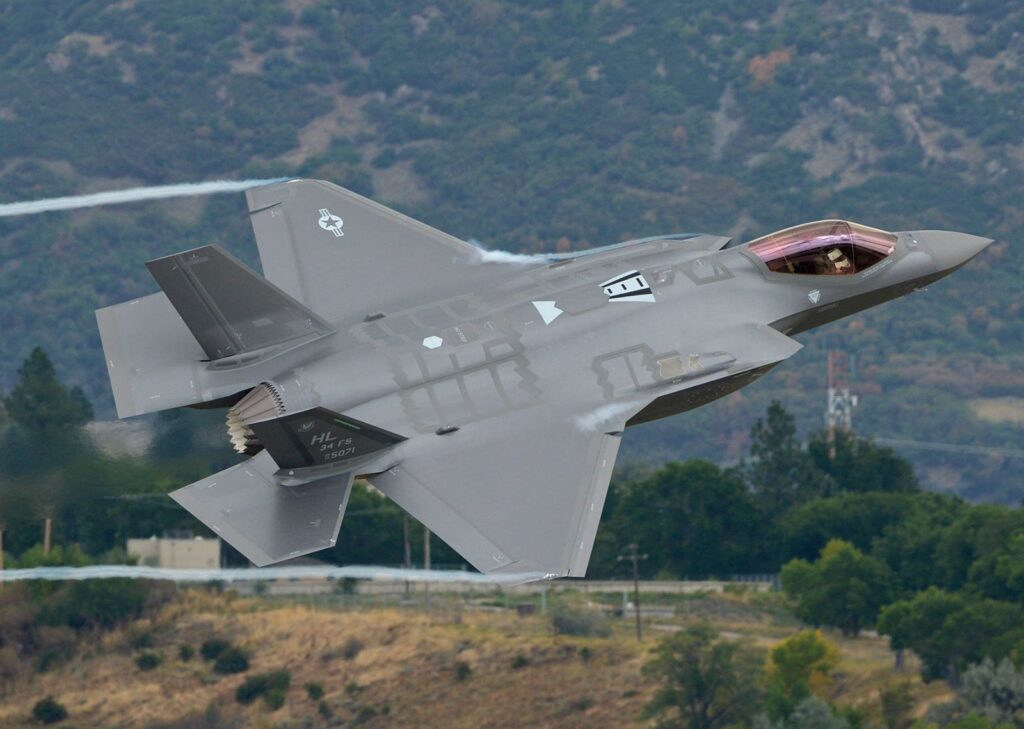
Modern air dominance is no longer defined by speed alone—it is defined by information, fusion, and decision advantage. As highlighted in Future of Air War Is Here (F-35 Helmet), the F-35’s Generation III Helmet Mounted Display System (HMDS) represents a fundamental shift in how pilots see, process, and act in combat.
Unlike legacy systems that rely on separate displays and a fixed heads-up display, the F-35 helmet integrates all critical functions—flight data, targeting, and night vision—directly onto the pilot’s visor. This unified system eliminates the need to look down into the cockpit, enabling continuous situational awareness in high-threat environments. (The National Interest)
The helmet’s most revolutionary capability is its integration with the aircraft’s sensor suite. By fusing inputs from radar, infrared systems, and the Distributed Aperture System (DAS), the HMDS delivers a real-time, 360-degree view of the battlespace. Pilots can effectively “see through” the aircraft, tracking threats and targets across all directions, day or night. (The National Interest)
As further explained in What Is the F-35’s Most Advanced Feature?, the helmet transforms the pilot into an integrated node within a broader sensor network. All data is fused and projected onto the visor in real time, allowing pilots to interpret complex information instantly and act with precision. (The National Interest)
Targeting is equally redefined. With head-tracking technology, pilots can designate and engage threats simply by looking at them—dramatically reducing response time and cognitive load. (The National Interest)
Equally critical is precision. Each helmet is custom-fitted to the individual pilot with millimeter accuracy, ensuring that projected symbology aligns perfectly with real-world positioning—an essential requirement for mission success. (The National Interest)
At eMagin, we advance this vision of integrated warfighter capability. Through cutting-edge OLED microdisplay technology, we enable brighter, higher-contrast, and lower-latency visualization systems that support the next generation of military platforms.
The future of air combat is not just about seeing more—it’s about understanding faster, deciding sooner, and acting with decisive clarity.